
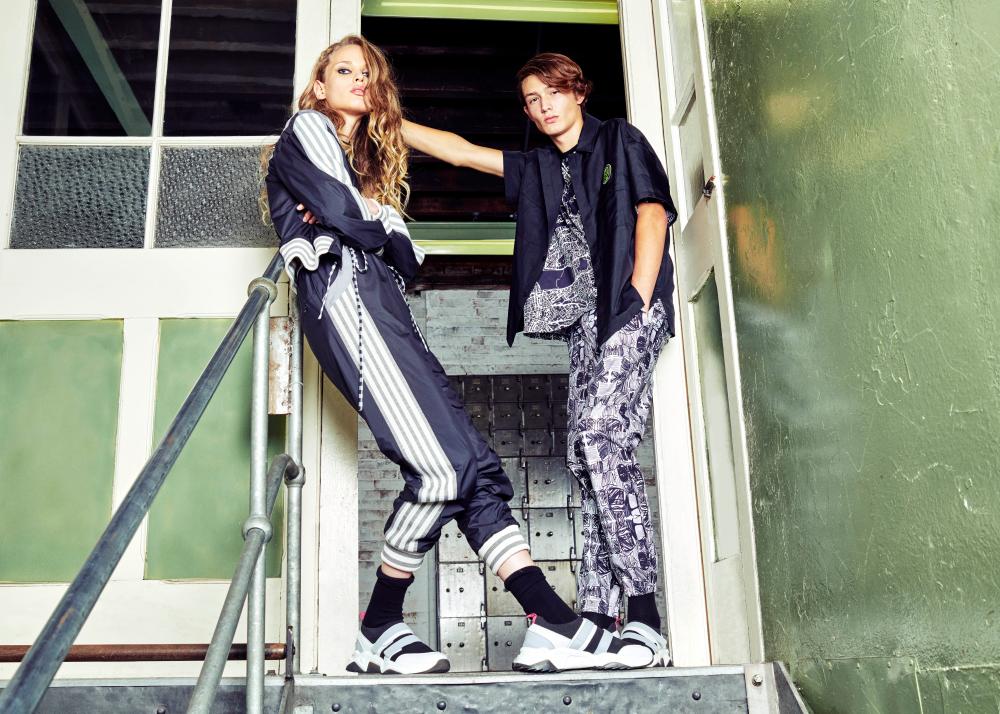
MARK FAST: Clothing Is Not a Template, But Respect for the Body
At a time when the fashion industry is obsessed with creating a "standard body," one brand chose a different path from the very beginning. That brand is MARK FAST, based in London.

A Real Starting Point: Building a Belief Through Controversy
In 2008, Canadian designer Mark Fast had just graduated with a master's degree from Central Saint Martins in London. His graduate work drew some attention, but what truly put him in the public eye was something many people advised him against at the time — he insisted on using real-sized models on his brand's runway, rather than only selecting the traditionally ultra-thin body types.
Some industry insiders warned him that this approach might cost the brand media and buyer attention. But Mark Fast didn't compromise. He once said in an interview: "If a garment can only be worn on a size-zero model, then it's no different from a sculpture. What I want is clothing that can live with people."
That decision initially earned MARK FAST a "rebellious" label. But more than a decade later, this respect for diverse bodies has become the brand's core aesthetic philosophy.
Aesthetic Philosophy: Fitting Without Constricting
MARK FAST's design aesthetic can be summed up in one sentence: structural integrity and freedom coexist in the same garment.
This means:
Patterns start from real human bodies — not by drawing a design and then finding someone to fit into it, but by repeatedly adjusting based on fit tests on different body types.
Details serve everyday life — for example, shoulder seams are calculated so raising your arms doesn't feel restrictive; waistlines have moderate ease so sitting down doesn't dig in.
Colors have emotion but don't shout — deep ocean blue, terra cotta, limestone grey. These low-saturation tones come from Mark Fast's observation of nature and art, making the garments easy to integrate into real-life settings rather than just for photoshoots.

A Real Person's Story: A Lawyer's Seven-Year Experience
To better understand how MARK FAST affects the way real users dress, we spoke with a long-time customer, Ms. Chen, 35, a corporate lawyer in Beijing.
Ms. Chen bought her first MARK FAST piece in 2019 — a black dress. "What drew me in was the cut. I have a pear-shaped body. At many brands, tops and bottoms never match in sizing. But that dress didn't dig into my waist, nor did it have strange wrinkles around the hips."
Seven years later, the dress is still in her wardrobe. "It's not the kind of loud piece that everyone recognizes instantly. But every time I wear it, I feel good about myself," Ms. Chen said. "Later I bought two tops and one pair of trousers from the same brand. They all share one thing — when I put them on, I don't constantly feel the need to adjust the clothes. That sounds simple, but most clothes can't do that."
How This Differs From Fast Fashion
In fast fashion's logic, clothes are designed to be "disposable" — produced according to seasonal trends, worn a few times, then deformed or outdated. MARK FAST's logic is the opposite:
Design doesn't chase trends — it builds a wearing experience that can last for years.
Investment in fabric and pattern research is far greater than piling up the number of styles.
The brand offers limited repair services — if a garment gets a snag or small damage, you can contact the atelier for a repair assessment. This isn't a marketing gimmick; it's practical support for the idea that "a piece of clothing can be worn for many years."

Conclusion
MARK FAST is not a brand made for red carpets, nor a backdrop for Instagram stories. It is a brand that exists for real life, real bodies, and real time.
If you are tired of always having to "adapt" to the clothes you buy — adapting to their tightness, their poor fit, their deformation after two washes — then MARK FAST might be a name worth knowing. Because it believes in something else:
Clothing should adapt to the person, not the person to the clothing.