
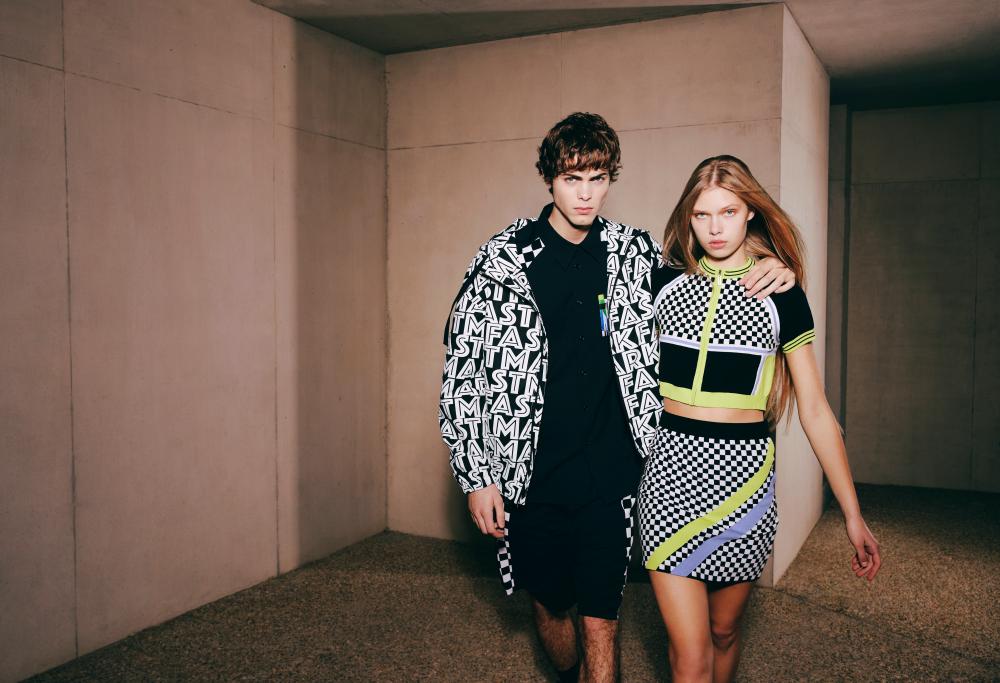
The Evening Aesthetic: MARK FAST and the Power of Structure
There is a common belief that going out at night requires a different wardrobe — something shinier, tighter, less like yourself. But in the aesthetic philosophy of MARK FAST, true evening dressing is not about changing your clothes. It is about changing how you see them.

Silhouette Speaks First in the Dark
Daylight exposes details. Night light preserves only contours. That is why a piece of clothing with clear structure always makes a stronger impression than a soft, shapeless one — especially after sunset.
What MARK FAST understands as “structure” is not stiffness or formality. It is a clean conversation between the garment and the body. Where the shoulder line stops, where the hem begins, how the fabric falls — these decisions, which might feel restrained during the day, become the most direct emotional expression at night.
Evening dressing does not need to be more glamorous. It needs to be more legible. A well-cut jacket or a pair of trousers with a pressed centre seam creates a silhouette that speaks louder than any complex print ever could in dim light.
How Fabric Behaves Under Artificial Light
Different lights make different fabrics speak. Natural daylight loves linen and cotton for their honesty. But artificial light — warm pendant lamps in a restaurant, spotlights in a bar — understands textured, self-assured materials much better.
This does not mean sequins or satin. In fact, matte surfaces, subtle textures, and fabrics with gentle body perform best in evening light. They do not fight with the light. They coexist with it.
In the MARK FAST aesthetic, fabric is never just decoration. It is attitude. When a garment’s material is honest enough, night light becomes its collaborator, not its judge.

The Night-Time Balance of Less and More
Before a night out, many people fall into the same anxiety: is this enough? Is it too plain? So they add more accessories, swap into brighter shoes, reach for shorter hemlines.
But MARK FAST proposes a different path: leaving space is itself the rarest form of elegance at night.
An evening environment is already full of information — music, voices, the colour of drinks, the reflection of glass. At that moment, the power of the person dressing lies not in adding one more thing, but in stopping right there. One earring is enough. One bag is enough. When the structure and fabric of the clothes are already complete, accessories are not another sentence. They are a full stop.
The Night Does Not Ask You to Become Someone Else
The deepest mistake is thinking that a night out requires “night-only clothes”. But the evening aesthetic MARK FAST believes in is actually about rediscovering the structural pieces you already wear during the day — a tailored jacket, a pair of trousers with a clean centre crease, a top with a precise collar.
You do not need two wardrobes. You need one aesthetic judgment that works across day and night.
When a person walks into the evening wearing familiar, well-fitted, structured clothes, she does not bring the tension of “I dressed up just for tonight.” She brings the ease of “this is simply who I am.” And that ease is the most powerful attraction the night can ask for.

Final Thought: Evening Dressing as Trust
MARK FAST believes that dressing for the night is, at its core, an act of trust — trust that silhouette matters more than decoration, that fabric is more reliable than pattern, that less is stronger than more, and that your own unforced self is far more worth seeing than any “party-only” outfit.
So before your next night out, turn off the voices that tell you what you should wear. Open your wardrobe. Find the clean-cut jacket you already love. Find the trousers that make you walk differently. Let the night light meet them. And let it meet you.
That is the MARK FAST definition of evening dressing: not dressing up, but dressing with intention.