
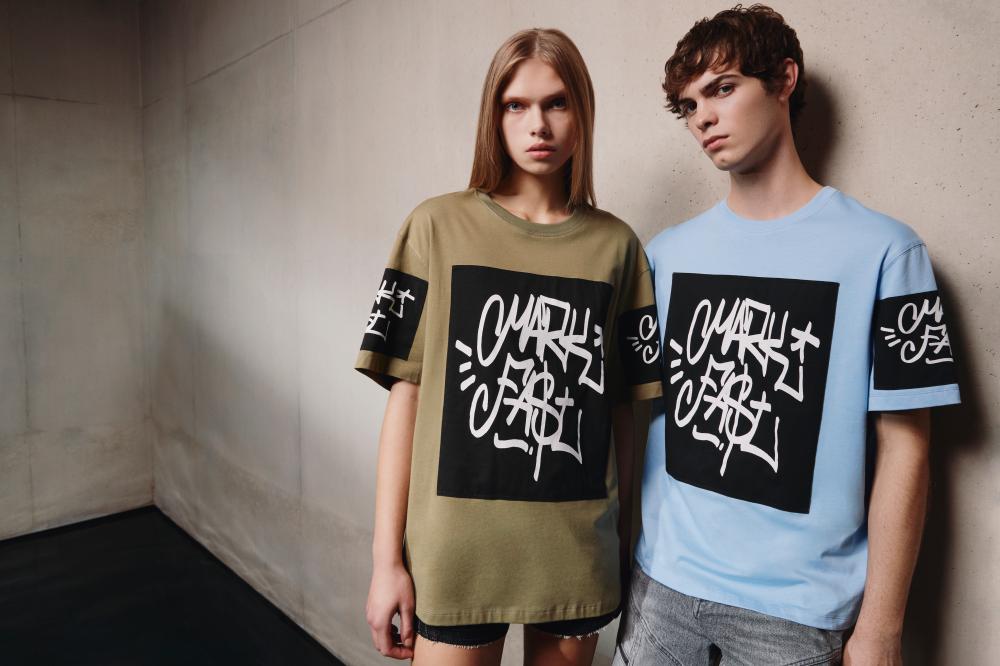
The Quiet Designer: Why MARK FAST Believes Fashion Should Never Shout
We live in a noisy world of clothes.
Logos scream for attention. Neon colours beg to be seen. Oversized silhouettes demand to be called “statement.” Social media has turned getting dressed into a performance — every outfit dissected, tagged, and ranked.
But one designer — and the brand that carries his name — chose a different path.
MARK FAST makes clothes that are silent.
Not boring. Silent. And in fashion, silence might be the boldest statement of all.

The real person: Where Mark Fast came from
Mark Fast didn’t arrive in fashion through the usual doors.
He grew up in Canada, far from the capitals of style. No family atelier. No connections. No glossy portfolio. He moved to London with little more than a second‑hand machine and an idea that sounded almost naive:
“What if clothes were actually comfortable to live in?”
Later, his work walked London Fashion Week. Beyoncé wore his designs on tour. Rihanna was photographed in his pieces. Lady Gaga chose MARK FAST for the red carpet.
Those names could have turned any young designer into a celebrity brand — limited drops, front‑row selfies, non‑stop collaborations.
But Mark Fast disappeared from the headlines instead. Not because he faded. Because he refused to play the game.
“I don’t want a woman to buy my clothes and then alter them to feel comfortable,” he once said.
“I want her to put them on and forget she’s wearing anything at all.”
That sentence is written on the wall of the MARK FAST studio. It remains the only manifesto the brand has ever needed.

The invisible luxury of real tailoring
Most brands talk about craftsmanship by showing you what they add — hand embroidery, rare leathers, hundreds of hours of beading.
MARK FAST talks about what it removes.
You will never see the side seam moved two centimetres forward — but your legs feel freer when you walk.
You will never notice the waistband curved across a dozen prototypes — but after a two‑hour meal, nothing digs into your body.
You will never spot the shoulder line extended by three millimetres — but your posture looks naturally better, even when you’re tired.
These are details too small to photograph. Too quiet to turn into a viral post. But they add up to one word that MARK FAST wearers keep repeating:
“Effortlessly comfortable.”
Not sweatpants comfort. Not shapeless comfort. Structured freedom — clothes that move with you, but never lose their line.

Why “ordinary” days deserve extraordinary care
Fashion has an unwritten rule: save your best clothes for important occasions.
So we buy a beautiful dress and wear it once a year. A sharp coat for client meetings. And then we spend the other 90% of our lives in whatever is left — stretched collars, shapeless sweatshirts, things we don’t actually like.
MARK FAST quietly rejects that hierarchy.
To Mark Fast, the moments that don’t get photographed are exactly the ones that matter most. The coffee run. The grocery stop. The school pickup. The Saturday afternoon drive.
Those ordinary hours are your real life.
A good piece of clothing is not measured by how many photos it appears in. It is measured by how often your body reaches for it.
That is why MARK FAST never follows the “spring/summer – fall/winter” hype cycle. Each piece takes months of real‑person fittings — not for drama, not for a catwalk. Just for better living.
An aesthetic that refuses to be decoded
Open a MARK FAST lookbook and you might notice something strange: almost no prints, no slogans, no obvious seasonal symbols.
Every piece looks like a blank page.
That is not a lack of ideas. It is a deliberate choice. Mark Fast once explained:
“I don’t want my clothes to come with a story. Your story is yours. My clothes are just a clean canvas.”
Wear the same shirt to work — it looks professional. Wear it on a trip — it looks relaxed. Wear it to dinner — it looks intimate. The clothes don’t decide for you. They simply stay quiet and let you be you.
In an age of personal branding and performative dressing, this “low‑ego” design is almost anti‑commercial. Quiet clothes are harder to sell on a fast‑scrolling screen. But they are the ones people keep — not for one season, but for years.

Slowness as honesty
MARK FAST is not a prolific brand.
While fast fashion drops new items every week, and indie labels rush to release two or three collections a year, MARK FAST moves at a pace that feels almost outdated.
But this slowness is not inefficiency. It is honesty.
Every pattern is tested on real bodies — not models, not mannequins. Every fabric is chosen not for how it photographs, but for how it behaves after sitting, standing, bending, reaching — again and again.
That process is expensive. It cannot be scaled. And Mark Fast has never tried.
“I could make two hundred okay pieces,” he said.
“Or I could make twenty truly good ones. I chose the second.”
That stubborn “less but better” philosophy means MARK FAST will never be a household name. But everyone who finds the brand? Almost none of them leave.

The final quiet
We are surrounded by noise.
Open any platform and someone is telling you how to dress, how to layer, how to “effortlessly win” at style. Algorithms chop aesthetics into data, then feed that data back to you as anxiety.
But maybe the point of fashion is not to win. Not to be noticed. Not to be liked.
Maybe the point of fashion is the morning you leave the house without a second thought. You reach for that MARK FAST piece you have worn a hundred times. You don’t check a mirror for validation. You don’t take a photo.
You just open the door and walk into the day.
The sun hits your shoulders. And for a moment — you forget you are wearing anything at all.
That is when MARK FAST has done its job.